Doctoral Program in Sustainability Science, Technology and Environment
Key information about the training program
Information about the training program
– Program name:
- In Vietnamese: Khoa học, Công nghệ bền vững và Môi trường
- In English: Sustainability Science, Technology and Environment
– Major Name:
- In Vietnamese: Khoa học Môi trường
- In English: Environmental Science
– Main research orientations:
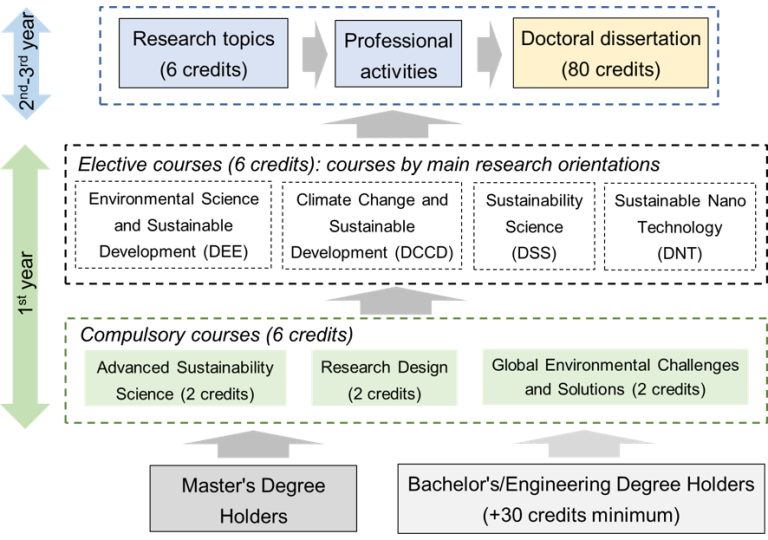
- Environmental Science and Sustainable Development
- Climate change and Sustainable Development
- Sustainability Science
- Sustainable Nano Technology
– Major Code: 9440301
– Language: English
– Degree level: Doctor
– Duration:
- 03 years (36 months) for students holding a master’s degree
- 04 years (48 months) for students holding a bachelor’s degree
– Degree title:
- In Vietnamese: Tiến sĩ ngành Khoa học Môi trường (Chương trình đào tạo Khoa học, Công nghệ Bền Vững và Môi trường)
- In English: Doctor of Philosophy in Environmental Science (Sustainability Science, Technology and Environment Program)
– Training institution: Vietnam Japan University, Vietnam National University, Hanoi (VNU-VJU).
Program objectives
- General objective
The Doctoral Program in Sustainability Science, Technology and Environment (DSTE) trains high-quality human resources with innovation and professional leadership competencies, high adaptability, and strong dedication and social responsibility in research, application, knowledge transfer, and entrepreneurship to address environmental challenges from global to local scales and promote sustainable development.
- Specific objectives
PO1 (Innovation and Professional Leadership): Doctoral graduates of the DSTE Program demonstrate professional qualities; liberal, interdisciplinary, and integrative thinking; innovative and professional leadership capacity to undertake positions as lecturers, researchers, experts, policy-makers and managers, project directors, consultants, entrepreneurs who actively contribute to the development, application, and transfer of sustainability science knowledge, advanced technologies, and engineering solutions to address environmental challenges from global to local scales, promote sustainable development, and strengthen Vietnam–Japan and international cooperation in related fields.
PO2 (High Adaptability and Responsiveness): Doctoral graduates of the DSTE Program have lifelong learning capacity, transferable skills, and high adaptability to change, meeting the evolving needs of science, technology, and engineering development in addressing environmental challenges from global to local scales and promoting sustainable development.
PO3 (Dedication and Social Responsibility): Doctoral graduates of the DSTE Program demonstrate high dedication and responsibility for their actions and outcomes, including discovering, evaluating, forecasting, and proposing new solutions for sustainable development based on sustainability science, environmental science, advanced technologies and engineering, institutional frameworks, and policy.
Career prospects
- Group 5: Entrepreneurs and start-up founders in sustainability science, technology, and environment.
- Group 4: Project managers and consultants working for socio-political organizations, international organizations, and non-governmental organizations (NGOs);
- Group 3: Policy makers and managers in the fields of sustainability science, technology and environment;
- Group 2: Specialists in sustainability science, technology, and environment (e.g., environmental science and sustainable development, climate change and sustainable development, sustainability science, sustainable nanotechnology);
- Group 1: Researchers and lecturers at universities and research institutes;
Program strengths
A high-quality academic program developed, delivered, and supervised with the participation of professors and experts from leading Japanese universities;
An international academic environment that enables students to stay abreast of global innovations and scientific, technological, and engineering breakthroughs in environmental science, climate change, sustainability science, and sustainable nanotechnology;
Advanced teaching methods with modern laboratories, equipment, and practical learning experiences;
Opportunities for internships and research in Japan, as well as participation in national and international research projects to support doctoral dissertation research;
Various scholarship and research funding opportunities for outstanding doctoral students based on academic performance and scientific publications;
Competitive career opportunities at government agencies, research institutions, international organizations, and enterprises in Vietnam, Japan, and other countries.
Training program content
For doctoral students holding a master's degree
Total credits required: 98 credits, of which:
– Doctoral courses: 12 credits
+ Compulsory: 6 credits
+ Elective: 6/42 credits
– Research topics, overview essays, and scientific research: 6 credits
– Professional activities, teaching assistance and training support: not counted in credits
– Dissertation: 80 credits
For doctoral students without a master's degree
Total credits required: 128 credits, of which:
– Supplementary courses: 30 credits
+ Compulsory: 9 credits
+ Elective: 21/126 credits
– Doctoral courses: 12 credits
+ Compulsory: 6 credits
+ Elective: 6/42 credits
– Research topics, overview essays, and scientific research: 6 credits
– Professional activities, teaching assistance and training support: not counted in credits
– Dissertation: 80 credits
Lecturers

Assoc. Prof. Dr. Nguyen Thi Hoang Ha
Assoc. Prof. Dr. Nguyen Thi An Hang
PGS.TS. Bui Nguyen Quoc Trinh

Dr. Pham Tien Thanh
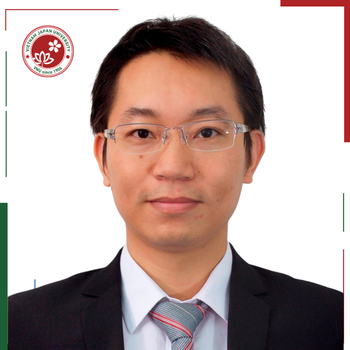
Dr. Nguyen Hoang Oanh

Dr. Tran Thi Viet Ha

Dr. Hoang Thi Thu Duyen

Dr. Nguyen Thi Thuy Hang

Dr. Nguyen Thuy Duong

Dr. Le Kim Quy
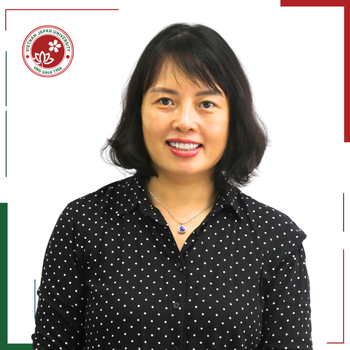
Assoc. Prof. Dr. Dao Quang Duy
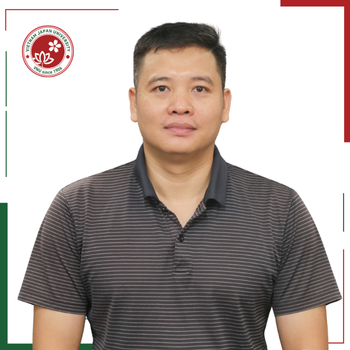
Assoc. Prof. Dr. Dao Quang Duy
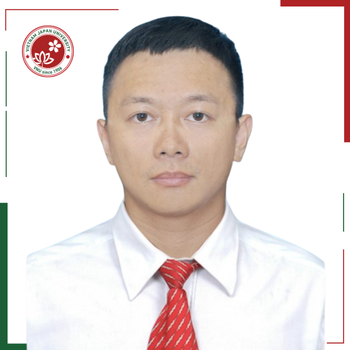
Dr. Bui Huy Kien
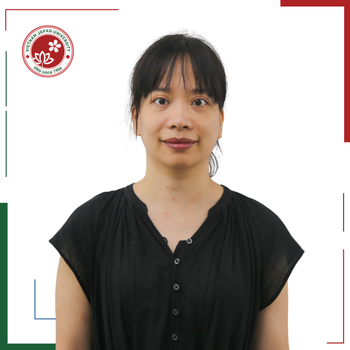
Dr. Ta Kim Nhung

Dr. Dang Minh Hieu
Admissions information
- Admission method
Review of academic dossiers in accordance with the regulations of Vietnam National University, Hanoi.
- Eligible applicants
Applicants must meet the requirements of Vietnam National University, Hanoi (Decision No. 3638/QĐ-ĐHQGHN dated October 21, 2022) and the admission plan of Vietnam Japan University approved by VNU-Hanoi, specifically as follows:
a) Degree requirement: Applicants must hold a master’s degree or a formal bachelor’s degree with a Good classification or above in a major relevant to the doctoral program applied for, or hold a qualification equivalent to Level 7 of the Vietnamese National Qualifications Framework in certain specialized majors relevant to the doctoral program. Degrees issued by foreign educational institutions must undergo recognition procedures in accordance with applicable regulations. Applicants who have completed an engineering program with a workload approximately equivalent to a master’s program will be considered by the Admissions Council, which will determine the number of supplementary courses required based on the application dossier.
b) Research capacity: Applicants must meet the following requirements:
– Research experience must be demonstrated through a master’s thesis from a research-oriented training program and published works. Applicants holding an application-oriented master’s degree, a master’s degree in a relevant major requiring supplementary courses, or applying directly from a bachelor’s degree must be author or co-author of at least 01 scientific publication. Scientific publications may include journal articles in specialized academic journals or conference proceedings from national or international peer-reviewed scientific conferences with an ISBN, related to the field or research topic, and recognized by the national professorial and associate professorial council of the relevant discipline or interdisciplinary field.
– A research proposal must be submitted, clearly stating: the intended research title and field; reasons for selecting the field and topic; an overview of the current state of domestic and international research in that field; research objectives; main research content; research methods and anticipated outcomes; reasons for choosing the training institution; implementation plan during the training period; the applicant’s experience, knowledge, understanding, and preparation for conducting the doctoral dissertation. The proposal may also suggest potential supervisors.
– A recommendation letter from at least one scientist holding the rank of professor, associate professor, or the degree of Doctor of Science or Doctor of Philosophy who has engaged in professional activities with the applicant and is knowledgeable in the field of sustainability science, technology and environment must be provided.
c) Diploma requirements:
List of relevant majors: Sustainability science, technology and environment is an interdisciplinary, transdisciplinary field of study. The DSTE Program is oriented toward research and application of sustainable science, advanced technology, and engineering to address environmental challenges from global to local scales and promote sustainable development; accordingly, the related majors of the program are as follows:
|
Relevant majors requiring no supplementary courses |
Relevant majors requiring supplementary courses |
|
Applicants holding a master’s degree in majors belonging to the following fields of study |
|
|
Environmental Science (84403), Physical Sciences (84401), Earth Sciences (84402), Natural Resources and Environment Management (88501), Biology (84201), Applied Biology (84202), Chemical, Materials, Metallurgical and Environmental Engineering (85203), Geological, Geophysical and Geodetic Engineering (85205), Mining Engineering (85206), Food, Food Processing and Beverage Technology (85401), Construction (85802), Agriculture (86201), Forestry (86202), Fisheries (86203) |
Mathematics (84601), Statistics (84602), Computer Science (84801), Information Technology (84802), Engineering Physics (85204), Sociology and Anthropology (83103), Business (83401), Administration and Management (83404) |
|
Applicants who do not hold a master’s degree and have graduated in majors belonging to one of the following fields of study |
|
|
Environmental Science (74403), Physical Sciences (74401), Earth Sciences (74402), Natural Resources and Environment Management (78501), Biology (74201), Applied Biology (74202), Chemical, Materials, Metallurgical and Environmental Technology (75104), Chemical, Materials, Metallurgical and Environmental Engineering (75203), Geological, Geophysical and Geodetic Engineering (75205), Mining Engineering (75206), Food, Food Processing and Beverage Technology (75401), Construction (75802), Agriculture (76201), Forestry (76202), Fisheries (76203) |
Mathematics (74601), Statistics (74602), Computer Science (74801), Information Technology (74802), Engineering Physics (75204), Sociology and Anthropology (73103), Business (73401), Administration and Management (73404) |
* The current training majors at the Faculty of Advanced Technologies and Engineering, Vietnam Japan University (Environmental Engineering, Climate Change and Development, Nanotechnology, Food Technology and Health, Smart Agriculture and Sustainability) are exact majors for the DSTE Program.
** Highly interdisciplinary majors, degrees awarded by foreign higher education institutions that do not correspond to the fields of study listed above, and majors not included in the Vietnamese Classification of Education and Training issued by the Ministry of Education and Training (Circular No. 09/2022/TT-BGDĐT dated 6 June 2022) shall be reviewed by the Admissions Committee. Based on the applicant’s academic records and application dossier, the Admissions Committee shall classify such majors into one of the following categories: (1) Relevant majors requiring no supplementary courses; (2) Relevant majors requiring supplementary courses; or (3) Non-relevant major.
Supplementary courses:
Applicants who have graduated from relevant majors requiring supplementary courses must complete the following courses:
|
No. |
Course code |
Course |
Credits |
Teaching hours |
||
|
Lecture |
Practice |
Self-study |
||||
|
I |
Supplementary courses |
8 |
||||
|
1 |
VJU6001 |
Cơ sở Khoa học bền vững Basic of Sustainability Science |
3 |
30 |
30 |
90 |
|
2 |
VJU6002 |
Phương pháp luận và Hệ thống thông tin cho Khoa học bền vững Methodology and Informatics for Sustainable Science |
3 |
30 |
30 |
90 |
|
3 |
MEE6023 |
Các vấn đề môi trường toàn cầu Global Environmental Issues |
2 |
30 |
0 |
70 |
Note: Applicants who have completed the above supplementary courses, or equivalent courses, as part of a master’s degree program shall be exempt from the corresponding supplementary course requirements.
d) Language requirement: Applicants must meet the language proficiency requirements of the DSTE Program, evidenced by one of the following qualifications or certificates:
– A bachelor’s degree or higher awarded by a foreign educational institution, a branch of a foreign educational institution in Vietnam, or a Vietnamese institution for full-time study conducted entirely in English;
– A bachelor’s degree in English language or English language pedagogy awarded by a Vietnamese educational institution;
– An English certificate equivalent to Level 4 of the 6-Level Foreign Language Proficiency Framework for Vietnam, valid within 2 years from the date of the language test to the date of application registration, issued by institutions accepted by the Ministry of Education and Training and Vietnam National University, Hanoi.
e) Work experience requirement: Research experience as demonstrated through a master’s thesis from a research-oriented program or through scientific publications.
- Expected enrolment
- Expected 5–10 doctoral students per cohort.
Program learning outcomes
Knowledge
General knowledge (for doctoral students from bachelor’s degree)
PLO1: Apply basic knowledge of sustainability science to identify specific issues related to environment, resources, materials, energy, digital transformation, or climate change and development.
Fundamental and specialized knowledge (for doctoral students from bachelor’s degree)
PLO2: Apply basic, interdisciplinary knowledge and research methodologies to assess and address issues related to environment, resources, materials, energy, digital transformation, or climate change for sustainable development.
Doctoral specialized knowledge
PLO3: Apply sustainability science methodology, in-depth knowledge, and advanced technology and engineering to detect, analyze, assess, and forecast specific issues related to environment, resources, materials, energy, digital transformation, or climate change and development.
PLO4: Propose comprehensive solutions in science, technology, engineering, and governance to address specific issues related to environment and sustainable development at various levels, from local and national to global scale.
PLO5: Complete one doctoral dissertation meeting the requirements for doctoral dissertations and the quantitative and qualitative requirements for scientific publications as stipulated by Vietnam National University, Hanoi.
Skills
PLO6: Design and implement a specific research or project in environmental science, climate change and development, sustainability science, or nanotechnology for sustainable development.
PLO7: Proficiently use data collection and analysis methods in research on environment, resources, materials, energy, digital transformation, or climate change and development.
PLO8: Creatively and innovatively analyze and address specific issues related to environment, resources, materials, energy, digital transformation, or climate change and development.
PLO9: Participate in domestic and international collaborative activities in research, application, knowledge transfer, and entrepreneurship related to environment, resources, materials, energy, digital transformation, or climate change and development.
PLO10: Demonstrate time management, professional communication and presentation skills, effective work planning, adaptability, and independent working and research.
PLO11: Present and discuss specialized scientific topics at disciplinary conferences/seminars; write scientific reports, scientific publications, or dissertations in English.
PLO12: Demonstrate collaborative and teamwork skills, lead a team in executing specific scientific tasks related to environment, resources, materials, energy, digital transformation, or climate change and development.
Self-control and self-responsibility
PLO13: Demonstrate innovation capacity in research, application of science, advanced technology and engineering, and knowledge transfer to address specific issues related to environment, resources, materials, energy, digital transformation, or climate change in service of sustainable development.
PLO14: Demonstrate the capacity to adapt to multicultural environments, global change, and international integration; lead, self-direct, and guide others.
PLO15: Demonstrate the ability to make expert-level decisions on environment, resources, materials, energy, digital transformation, or climate change in service of sustainable development.
PLO16: Demonstrate social responsibility in research, application, knowledge transfer, and entrepreneurship related to sustainability science, technology, and environment
Ethics
PLO17: Demonstrate exemplary ethical qualities, comply with state policies and laws, and adhere to institutional regulations.
PLO18: Demonstrate professional and social ethics in research, application, knowledge transfer, and entrepreneurship in service of the community.
Requirements for the doctoral dissertation
– The dissertation is an independent, creative scientific research work by the doctoral student in one of the following specific orientations: environmental science and sustainable development, climate change and sustainable development, sustainability science, sustainable nanotechnology.
– The dissertation must contain new scientific, theoretical, and practical contributions of value in developing and expanding scientific knowledge and fully addressing the research tasks of the dissertation.
– The dissertation must provide clear evidence of applying world-leading advanced technologies and engineering to solve one or more current, specific issues related to environment, resources, materials, energy, digital transformation, or climate change in service of sustainable development.
– The title and content of the dissertation must not duplicate any previously published or conducted research work, whether domestic or international.
– The research results in the dissertation must primarily be the work of the doctoral student obtained during the training period. If the dissertation constitutes a scientific work or part of a scientific work by a collective authorship in which the doctoral student made the primary contribution, written consent from all authors is required.
– The dissertation must uphold academic integrity and comply with citation regulations currently in force at Vietnam Japan University.
– The language of the dissertation is English.
Requirements on the quantity and quality of published scientific works
Doctoral students must publish research results from the dissertation in specialized academic journals as principal author (first author/corresponding author), achieving a total score of at least 2.0 points calculated according to the maximum score assigned by the National Professorial Council for each type of work (as principal author, without score sharing when there are co-authors). International publications must be written in English; articles published in domestic specialized academic journals must be on the list stipulated by the National Professorial Council with a minimum evaluation score of 0.75 points, and must meet one of the following criteria:
– At least 01 article published in a journal indexed in Web of Science or Scopus (WoS/Scopus);
– 01 granted patent/utility solution and at least 01 international paper/report in one of the following: (i) a book chapter published by reputable international publishers, or (ii) a monograph published by reputable international publishers, or (iii) a paper in the proceedings of an international peer-reviewed conference with an ISBN, or (iv) an article in a reputable foreign specialized academic journal with peer review and an ISSN;
– At least 02 international papers/reports in one of the following: (i) a book chapter published by reputable international publishers, or (ii) a monograph published by reputable international publishers, or (iii) a paper in the proceedings of an international peer-reviewed conference with an ISBN, or (iv) an article in a reputable foreign specialized academic journal with peer review and an ISSN.
ĐĂNG KÝ TƯ VẤN TUYỂN SINH 2024