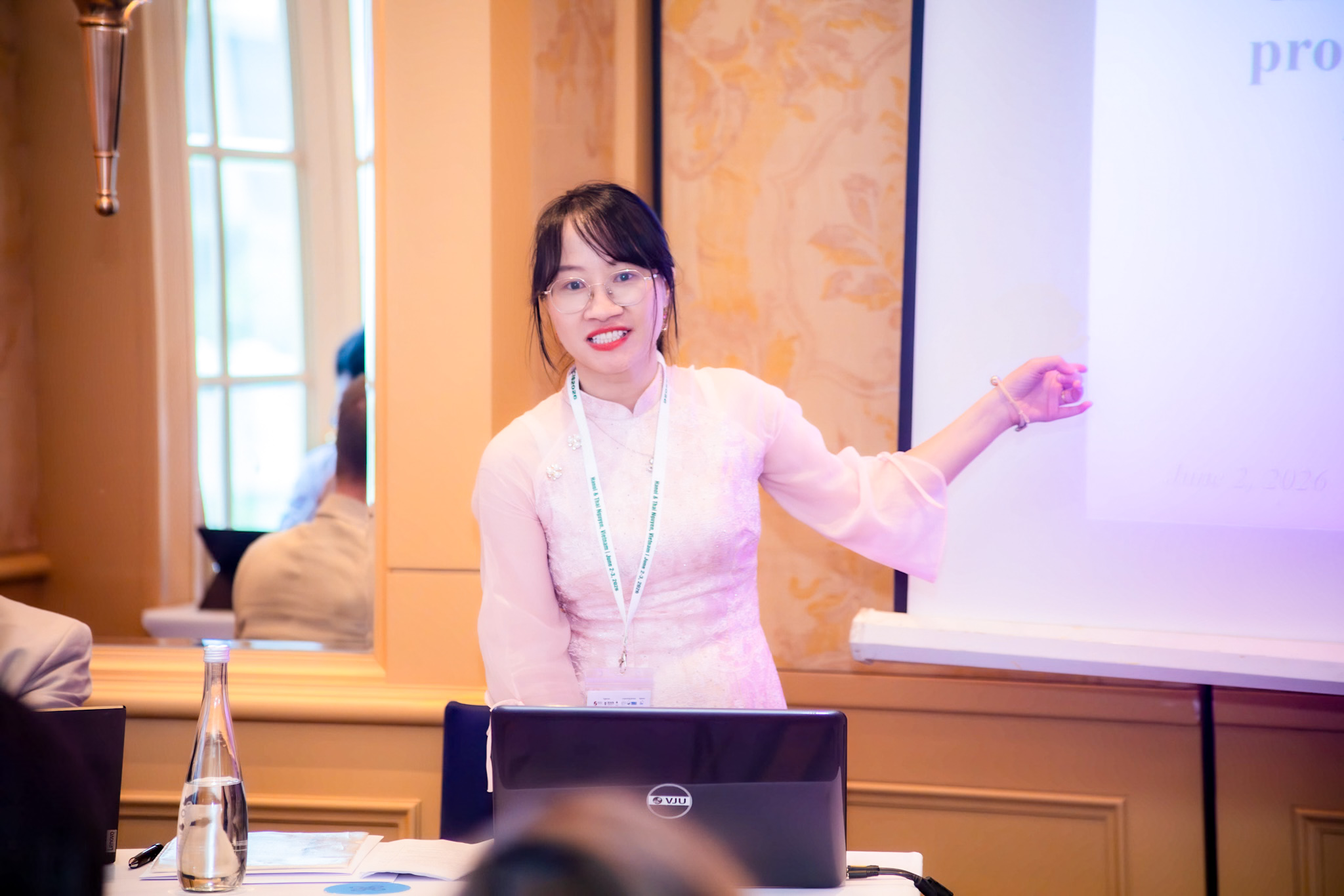
Nguyen Thi Thuy Dung, a lecturer in the Japanese Language Education (JLE) Program at Vietnam Japan University (VJU), has transformed her international exchange experiences into meaningful academic contributions. She was one of two young scholars to receive the Best Oral Presentation Awards for Young Researchers at the International Conference on Innovation and Sustainability in Higher Education (ICIS2026).
From Participant to Researcher
As the internationalization of higher education continues to gain momentum, student exchange programs are increasingly recognized as important platforms for learners to experience multicultural environments, broaden their perspectives, and develop global competencies.
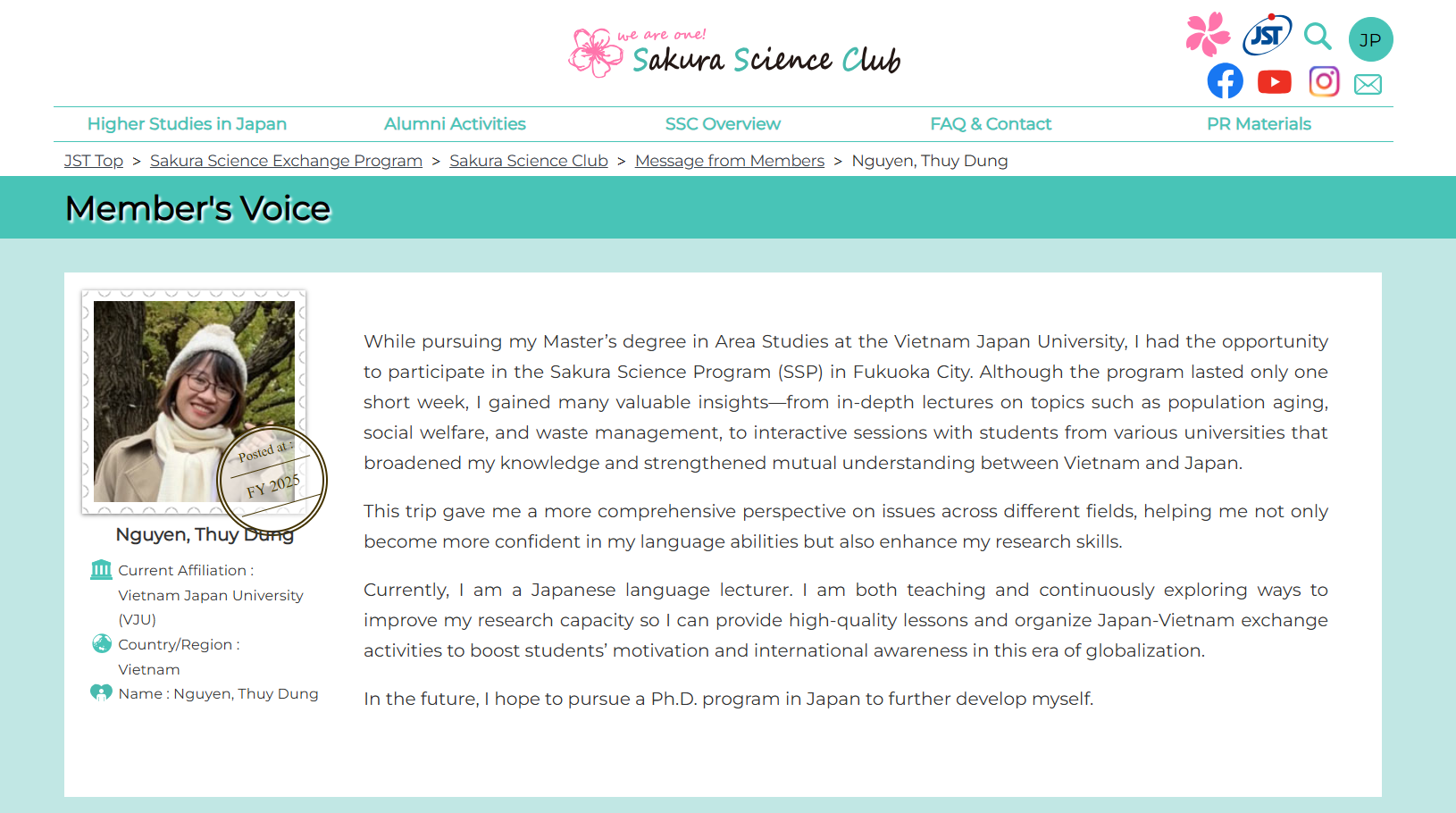
According to Ms. Dung, while many previous studies have focused on long-term exchange programs in Western countries, there has been limited research examining experiences similar to her own in the Sakura Science Exchange Program (SSP) – a short-term, multilingual exchange program conducted in English and Japanese. She participated in the program twice: first as a student participant in Fukuoka and later as a group leader in Okayama.
“Both trips had a profound impact on my way of thinking. I realized that if the program had changed me so much, it might have had a similar influence on my students. Coincidentally, during a presentation class at VJU, one of my students shared what they had learned from the exchange program, and I was deeply impressed. Recognizing how meaningful and transformative these experiences were, I decided to investigate the topic further,” she recalled.
Ms. Dung’s research team adopted a qualitative approach to explore the changes experienced by students after completing the exchange program. Rather than viewing SSP merely as a short-term international exchange activity, the study sought to uncover its deeper impacts on learning, career aspirations, and personal development.
Through data collection and analysis, the study found that short-term international exchange programs provide far more than cultural exposure and new knowledge. They help cultivate a global mindset, enhance self-confidence, and strengthen students’ motivation to learn. Despite lasting only one week, the program generated significant impacts on participants. Beyond greater cultural understanding and confidence in communicating with Japanese people, students also developed analytical and problem-solving skills. Many expressed aspirations to pursue further education or conduct research on issues they had encountered during the program.
“More importantly, these aspirations were translated into concrete actions. Some students enrolled in double-degree programs in Japan, pursued master’s studies either in Japan or at VJU, or applied for MEXT scholarships,” Ms. Dung noted.
Perseverance, Connection, and Growth along the academic journey
Looking back, Ms. Dung regards the award at ICIS2026 as the result of a long process of learning and persistence rather than a single moment of success. For her, academic research has never been an easy path. Every project begins with seemingly simple questions that require months, or even years, of literature review, data collection, analysis, and critical reflection.
She identified two major challenges during the study. The first was managing the substantial amount of qualitative data collected through in-depth interviews with nine student participants. The research team spent considerable time discussing and selecting an appropriate analytical framework to systematically organize the data. The second challenge involved obtaining accurate statistics on Vietnamese participation in SSP, as publicly available information primarily provided aggregated data covering many countries. To address this issue, Ms. Dung actively reached out to the program’s alumni network and contacted representatives of the Sakura Science Program Secretariat under the Japan Science and Technology Agency (JST), ultimately obtaining the information necessary for the research.
She considers herself fortunate to have received support from colleagues, collaborators, and individuals passionate about the program, particularly during the early stages when the research idea was first taking shape.
Another factor contributing to the success of the study was the enthusiastic participation of VJU students. Ms. Dung recalled a student sharing how, while observing staff members at a nursing home in Japan, they noticed that each elderly resident had unique health conditions and therefore required different forms of care. From this observation, the student learned an important lesson: effective solutions can only be developed after fully understanding the root of a problem.
“Duirng the trip, I encouraged students to keep detailed notes, and they did an excellent job. It was only when they shared their reflections that I realized how seriously they had observed and learned throughout the program. Their eagerness to learn was truly admirable,” she said. “Listening to their stories broadened my own perspective and made the purpose of this research clearer than ever.”
From the perspective of a young researcher, Ms. Dung believes that every research project is built upon the invaluable support of senior scholars, colleagues, and students. For the study presented at ICIS2026, continuous academic discussions, constructive feedback, and close collaboration among team members played a crucial role in its success.
“If you do not yet feel confident enough to go alone, work with a team. This time, I would like to express my deepest gratitude to Dr. Nguyen Anh Hao (Waseda University), Dr. Le Cam Nhung (JLE), and VJU students of Japanese Studies,” she shared.
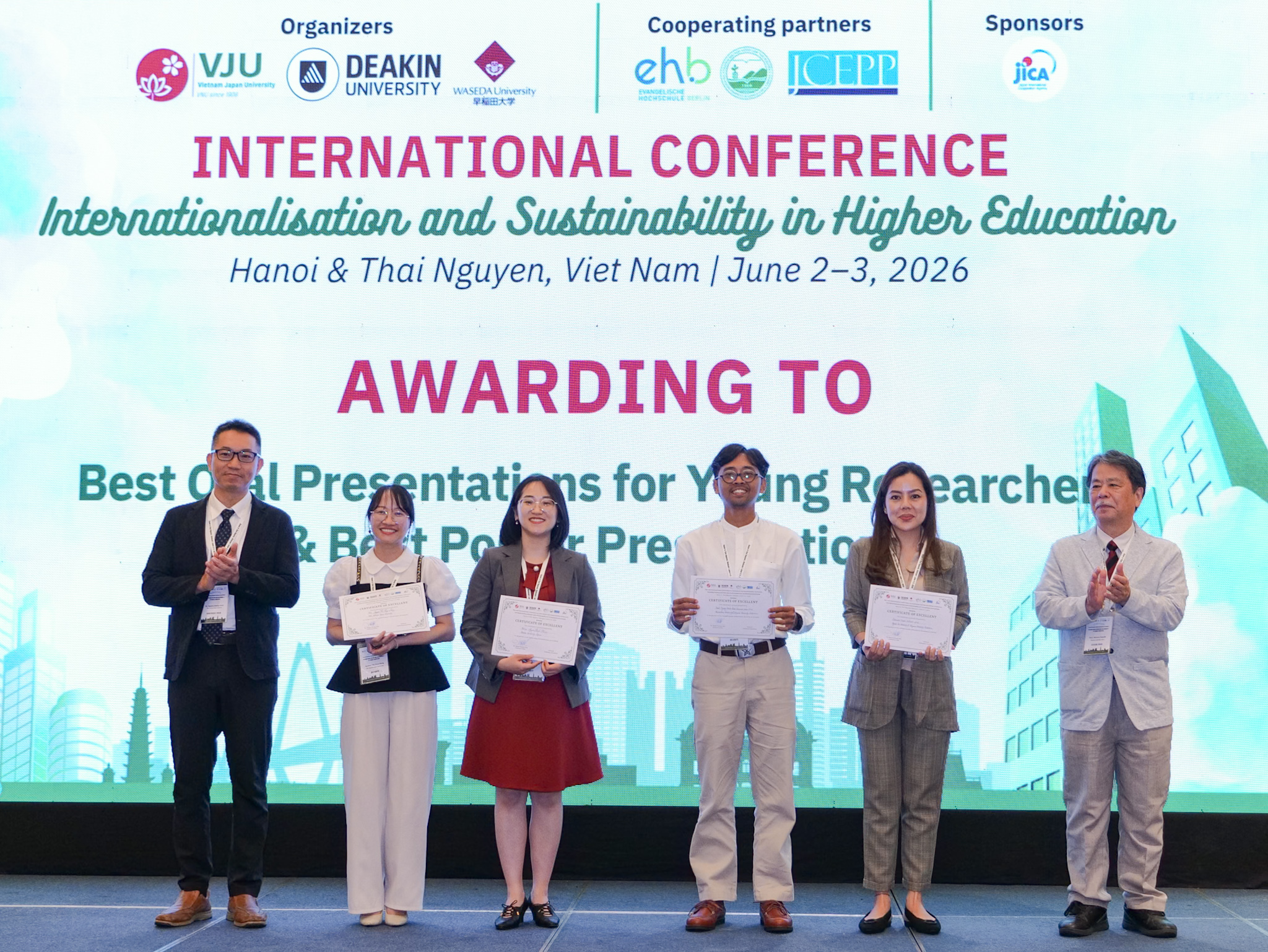
ICIS2026: Bringing young researchers’ voices to the global stage
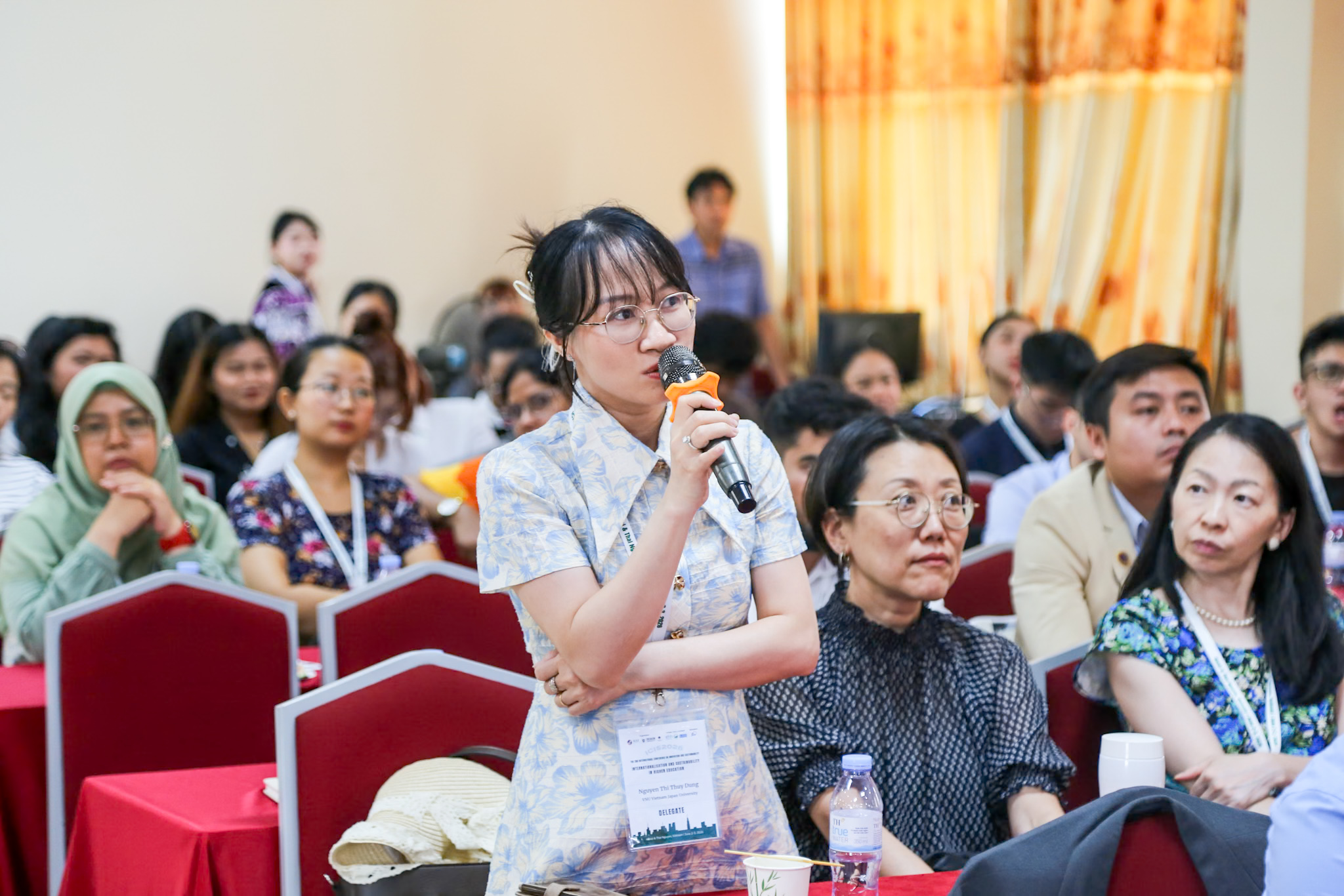
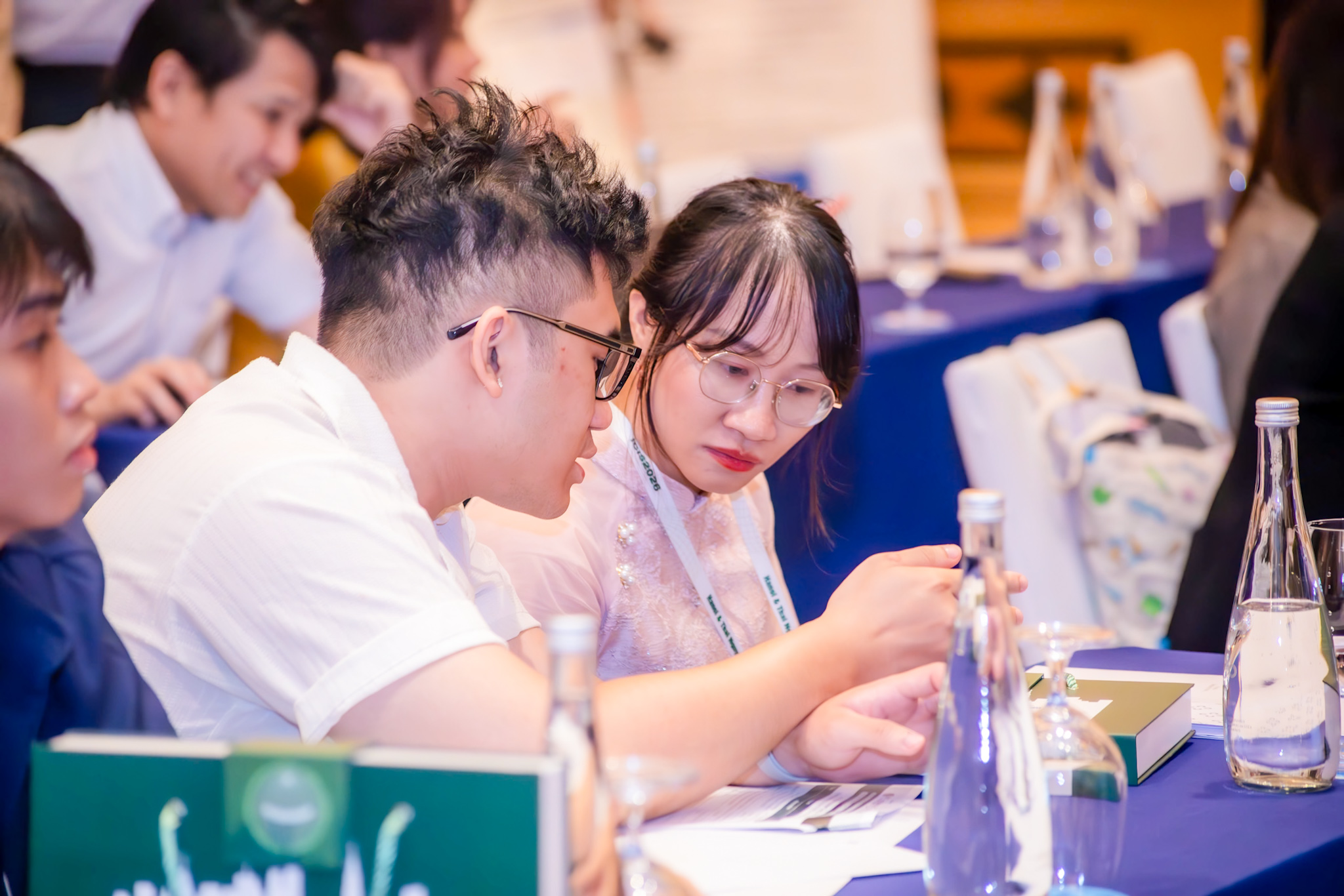
For Ms. Dung, receiving the Best Oral Presentation Awards was both a joyful achievement and meaningful recognition. However, what left the deepest impression was the academic experience that ICIS2026 provided. Through conference discussions and scholarly exchanges, she gained new perspectives on familiar research topics and learned how international scholars design and conduct their research projects.
Drawing on her experience at ICIS2026, Ms. Dung believes that young researchers should be encouraged to bring their voices to international academic forums. Every conference presentation is not only an opportunity to share knowledge but also a chance to learn, improve, and gradually establish one’s place within the global academic community. At the same time, conferences provide valuable opportunities for researchers with shared interests to connect, expand their professional networks, and explore future collaborative projects.
The more she engages in research, the more she realizes how many important questions remain to be explored in today’s rapidly changing world. Working in the field of education, she is particularly interested in studies that examine issues from the perspectives of both teachers/lecturers and learners.
“It is difficult to identify a single topic because there are many issues embedded within these two perspectives. However, the broader goal I hope to pursue is contributing to the improvement of foreign language education in Vietnam,” she said. She added that, given the opportunity, she would like to extend the research to students from other universities who participated in SSP in order to identify common patterns, differences, and underlying factors shaping the program’s impact on participants.