Alongside learning about semiconductors in the classroom, students in the Engineering program in Semiconductor Chip Technology (ESCT) at VNU Vietnam Japan University (VJU) recently had the opportunity to hear directly from professors from the University of Tokyo and Ritsumeikan University about research directions and technologies shaping the future of the semiconductor industry. Their experience at the 2nd Vietnam-Japan Semiconductor Symposium 2026 (VJSS-2026) brought concepts that students often describe as “quite complex and abstract” closer to their learning experience, while broadening their perspectives on future academic and career pathways.
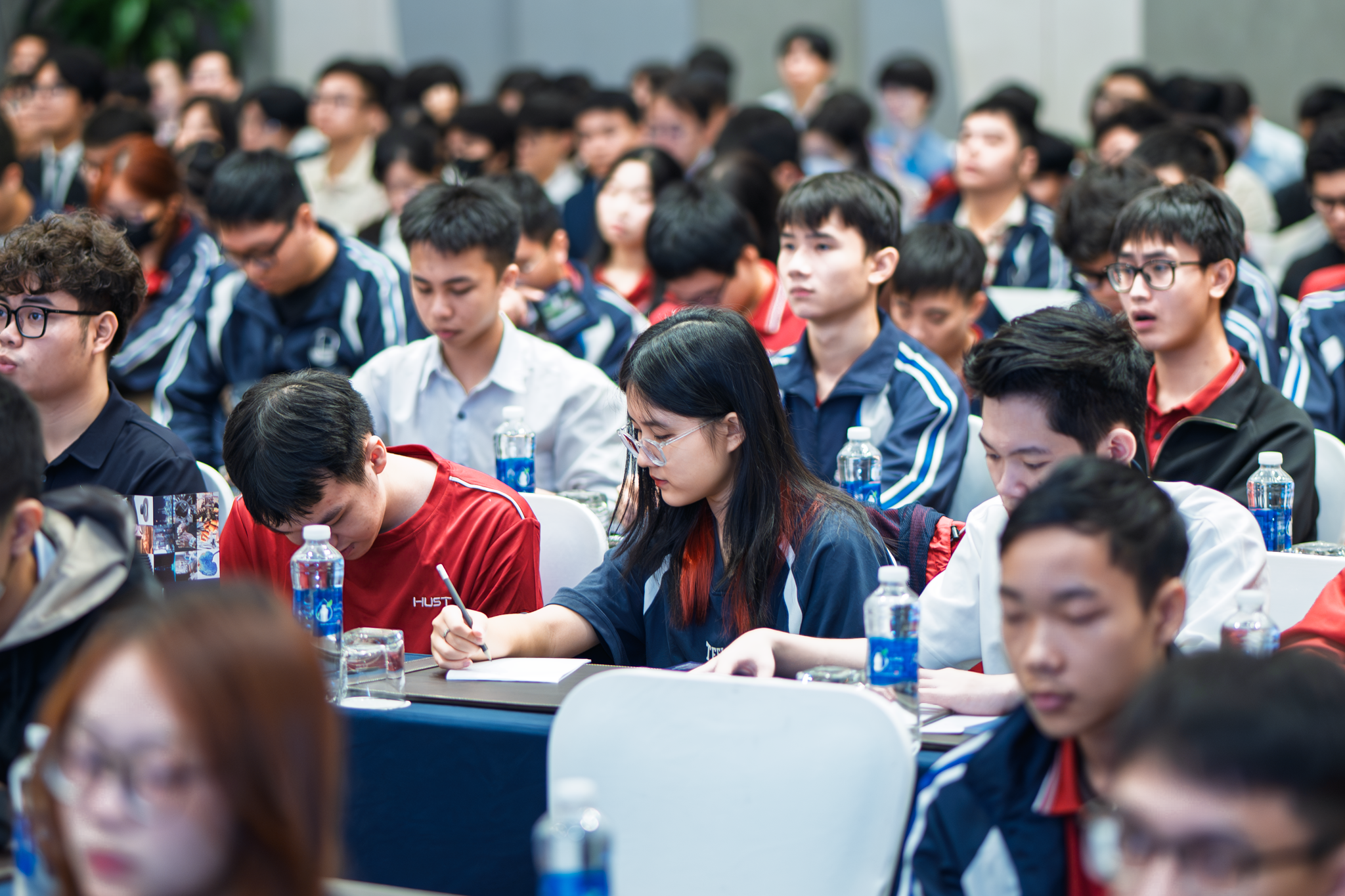
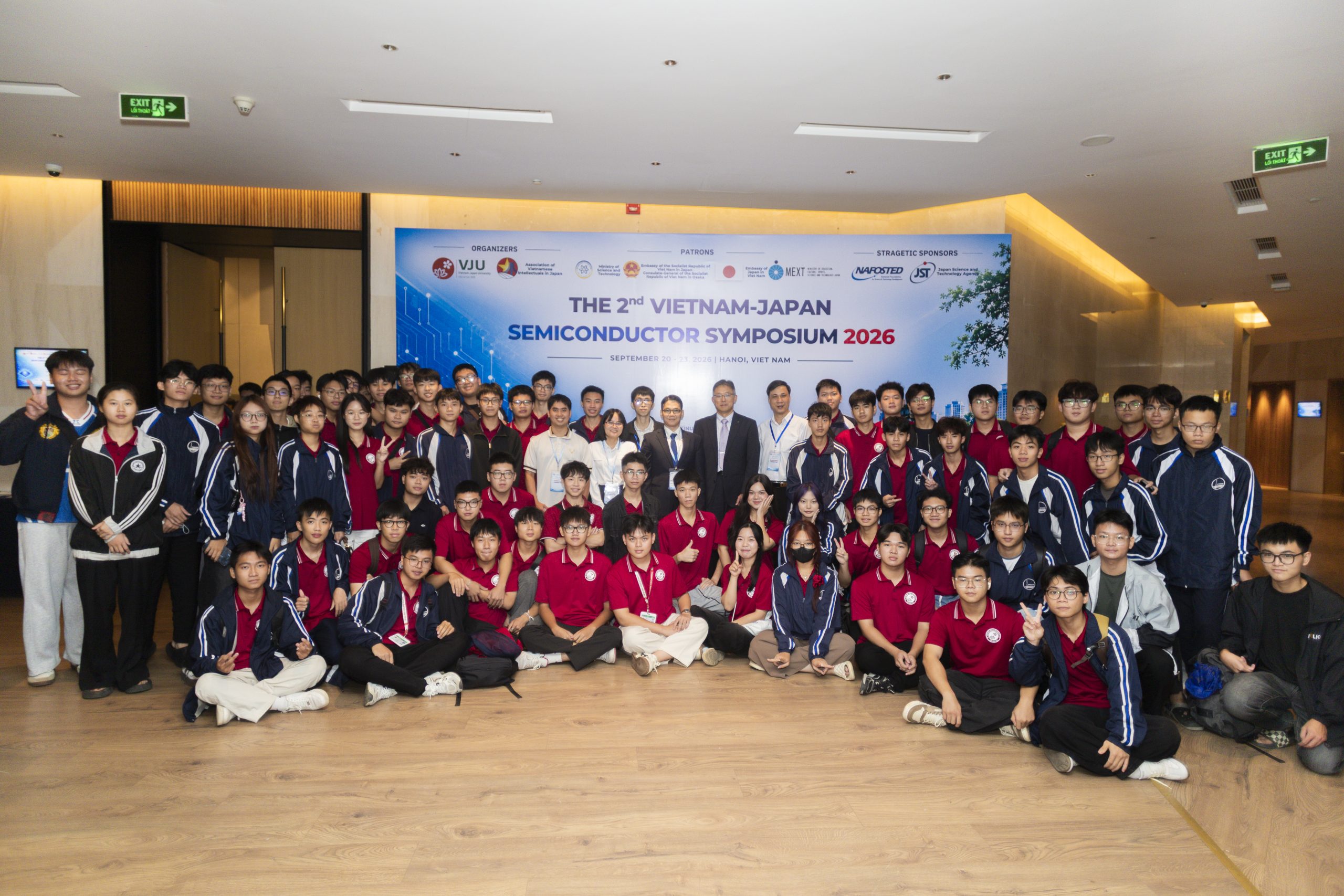
The Lecture Session was held as part of VJSS-2026, attracting the interest and participation of more than 350 students from nine universities across Hanoi.
From difficult-to-grasp concepts to a clearer picture of Semiconductors
For second-year ESCT student Dìu Đại Minh, semiconductors are still a relatively new field, requiring a strong technical foundation and the ability to engage with concepts that can be difficult to visualize through textbooks alone. According to Minh, the three lectures gave students an opportunity to explore semiconductors from different perspectives while learning about technology trends currently being researched and developed around the world. The knowledge shared beyond the curriculum also helped students gain a clearer initial understanding of the directions they could pursue after graduation.
What impressed Minh was not only the technical content, but also the professors’ approach to teaching. Complex topics related to semiconductor materials and chip fabrication processes were presented through diagrams, visual materials, and connections to real-world manufacturing in Japan. “The atmosphere of the Lecture Session was also very open. Whenever students asked questions, the professors responded directly, and there was no distance between them and the students,” Minh recalled.
For Nguyễn Quang Dũng, an ESCT2025 student, his experience at VJSS-2026 was particularly meaningful as he had just returned from an internship at Shiima Electronics in Japan. During the two-week internship, Dũng had the opportunity to learn directly about the production, testing, and quality control processes for electronic components, visit technical facilities at the factory and laboratory, and work alongside Japanese engineers.
Returning to VJU and listening to the professors at VJSS-2026 discuss spintronics, semiconductor materials, chip design and fabrication, as well as their broader connections to environmental issues, sustainable development and social impacts, Dũng found that many of the concepts were no longer entirely unfamiliar. Instead, they helped him “broaden his perspective” and inspired him to think more creatively. “Through the professors’ sharing and the open discussions with students and researchers, I feel that I have a clearer sense of my academic path and future career direction, particularly opportunities to study and work in Japan,” Dũng said.
Three lectures, three perspectives on the future of Semiconductor Technology
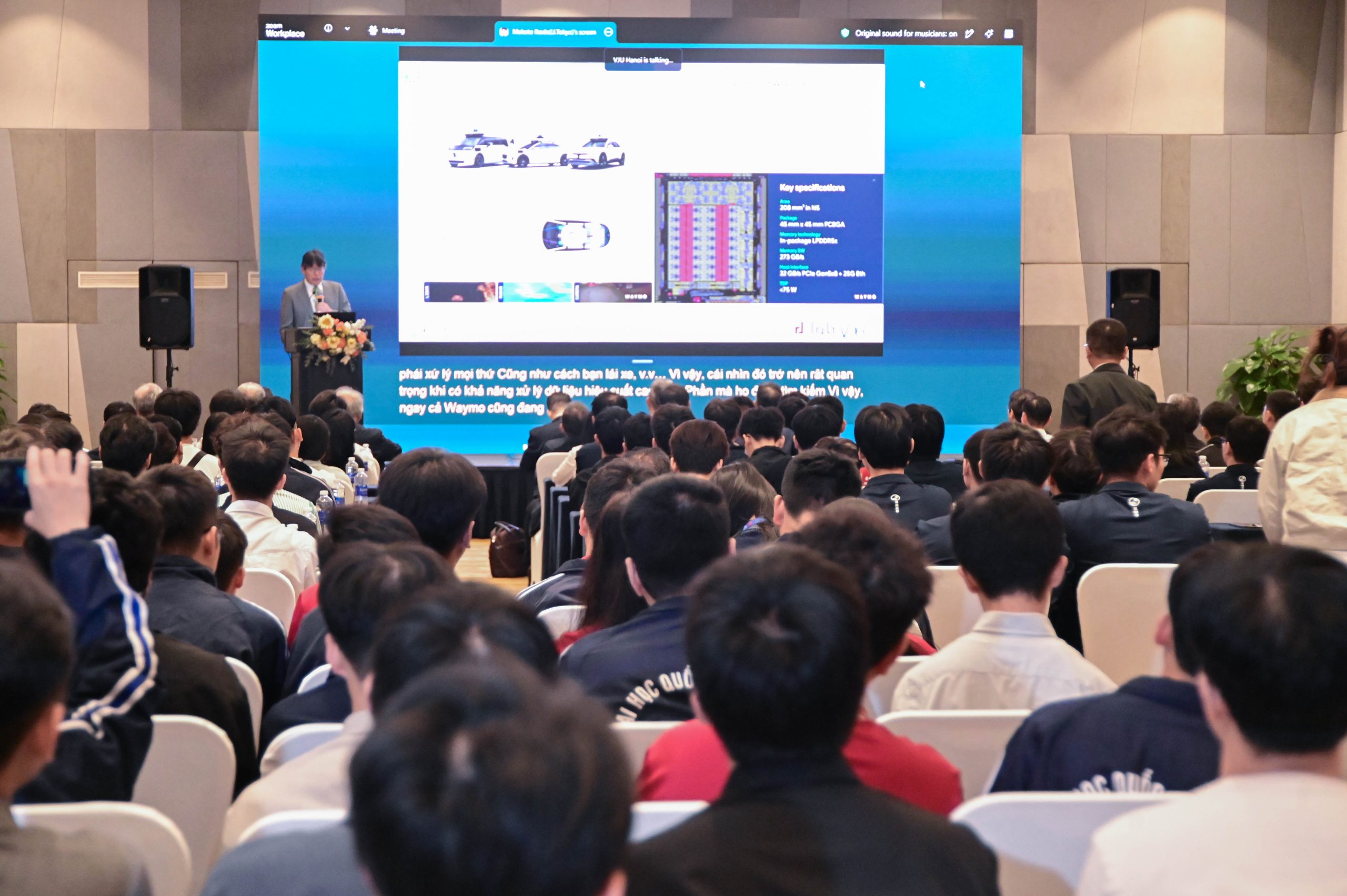
The students’ experience came from a special academic activity within VJSS-2026: the Lecture Session, featuring three professors from leading Japanese universities. The program was designed to give students, early-career researchers and others interested in semiconductors access to foundational knowledge and emerging directions in the field.
The session began with Prof. Makoto Ikeda, Professor and Director of the Systems Design Lab (d.lab), the University of Tokyo, who introduced chip design and fabrication through the Agile-X platform. His lecture, “Chip Design and Tape-out Courses including Agile-X, Agile Chip Design and Fabrication Platform for Updatable Chip Design,” explored the achievements and future prospects of this flexible chip design and fabrication platform, as well as practical chip design and fabrication courses at the University of Tokyo.
Next, Prof. Tsutomu Araki, Professor of Electrical and Electronic Engineering at Ritsumeikan University, introduced students to the world of compound semiconductors through his lecture, “Fundamentals and Future Prospects of Compound Semiconductors: Exploring the Potential Beyond Silicon.” The lecture examined the characteristics, advantages and applications of materials such as gallium nitride (GaN), particularly in power electronics and next-generation semiconductor technologies.
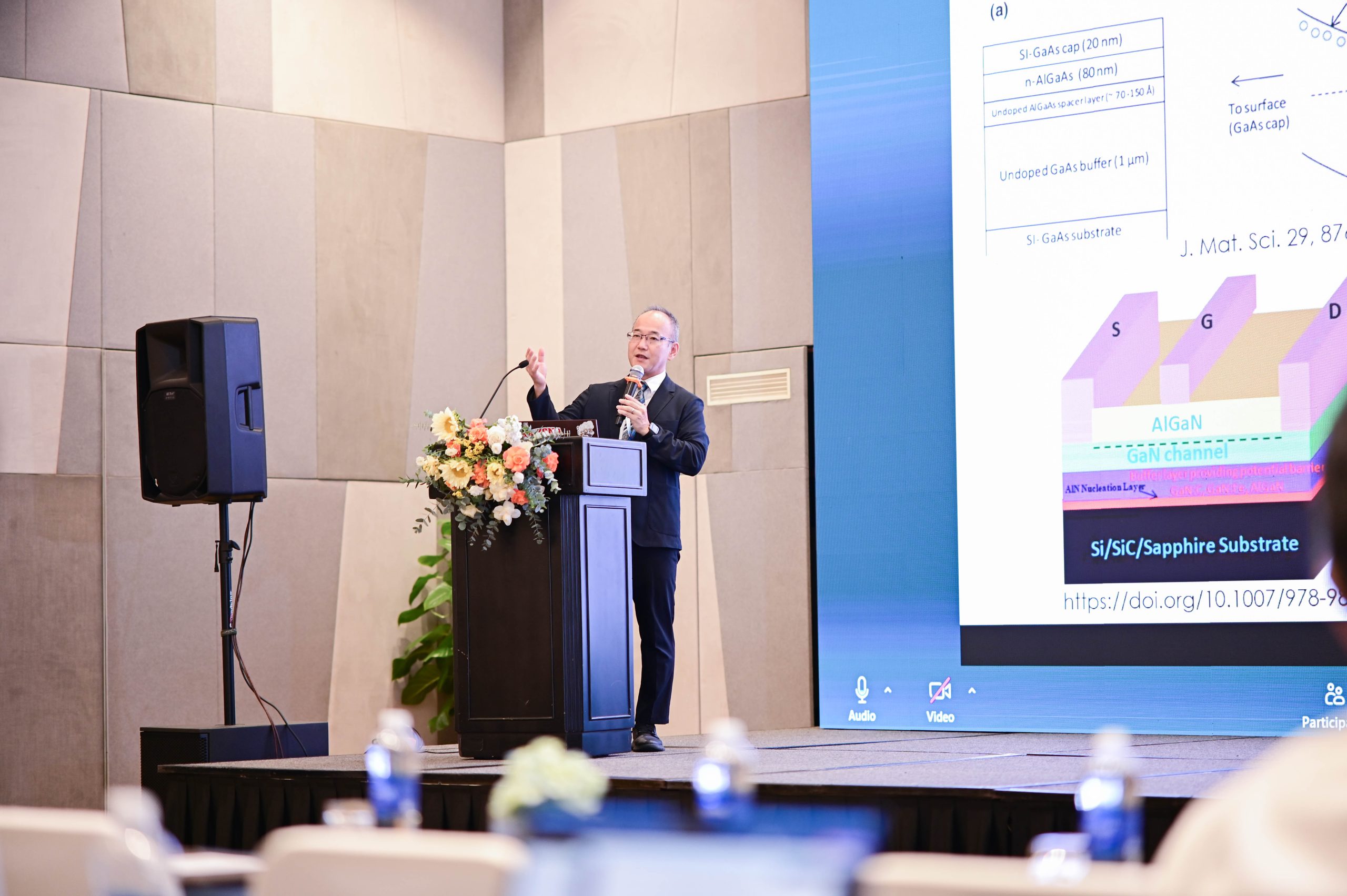
Taking a different approach, Prof. Masaaki Tanaka, Professor of Electrical and Electronic Engineering and Director of the Center for Spintronics Research Network (CSRN) at the University of Tokyo, introduced spintronics through his lecture, “Spintronics – Fundamentals and Applications.” The field explores not only the charge of electrons and holes, but also their spin, alongside foundational materials, phenomena and devices such as ferromagnetic semiconductors, heterostructures, spin transistors and silicon-based spintronic devices.
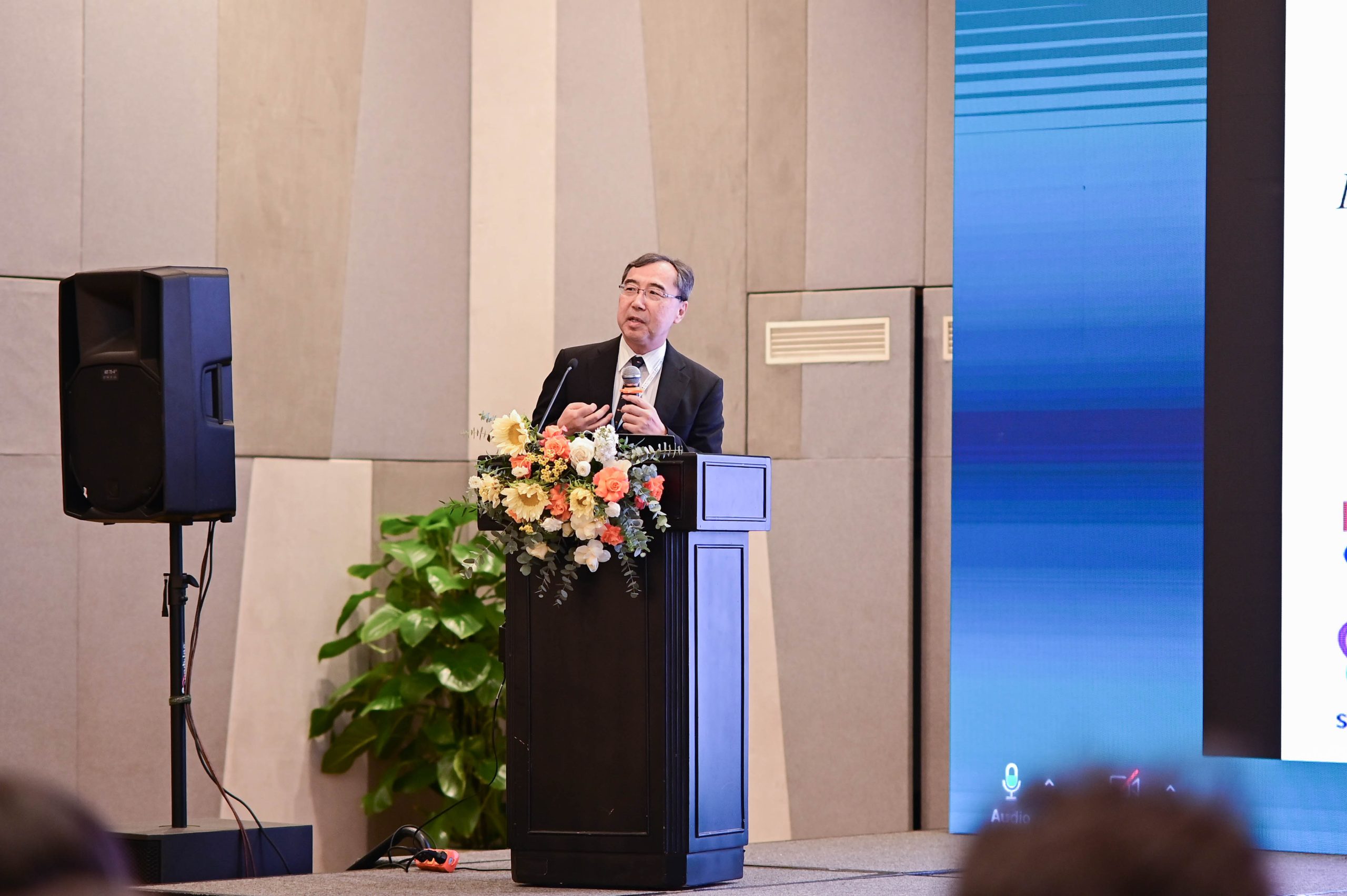
From spintronics and semiconductor materials to circuit design and chip fabrication, the three lectures offered students diverse perspectives, helping them better understand current research directions and developments in semiconductor technology.
Bringing international academic experiences closer to VJU students
The VJSS-2026 experience also reflects VJU’s growing emphasis on connecting education with research, advanced technologies and international collaboration, creating opportunities for students not only to acquire specialized knowledge but also to engage directly with the scientific community and real-world challenges in their fields.
Under VJU’s Development Strategy for 2026–2030, with a vision to 2045, we continues to pursue a research-oriented university model, with a strong focus on internationalization, science and technology research, and bilateral Vietnam-Japan cooperation. In this context, activities such as VJSS-2026 serve not only as an international academic forum, but also as part of the learning environment and educational experience offered to VJU students.
For Minh, VJU’s organization of VJSS-2026 also encouraged ESCT students to step beyond their comfort zones: “I feel that semiconductor technology is still a very new field, and many young people like me may not yet feel confident enough to attend an international symposium. As the class monitor, I helped share information from our lecturers and encouraged my classmates to participate. Seeing so many of my classmates attend and gain so much from the Symposium made me genuinely happy.”
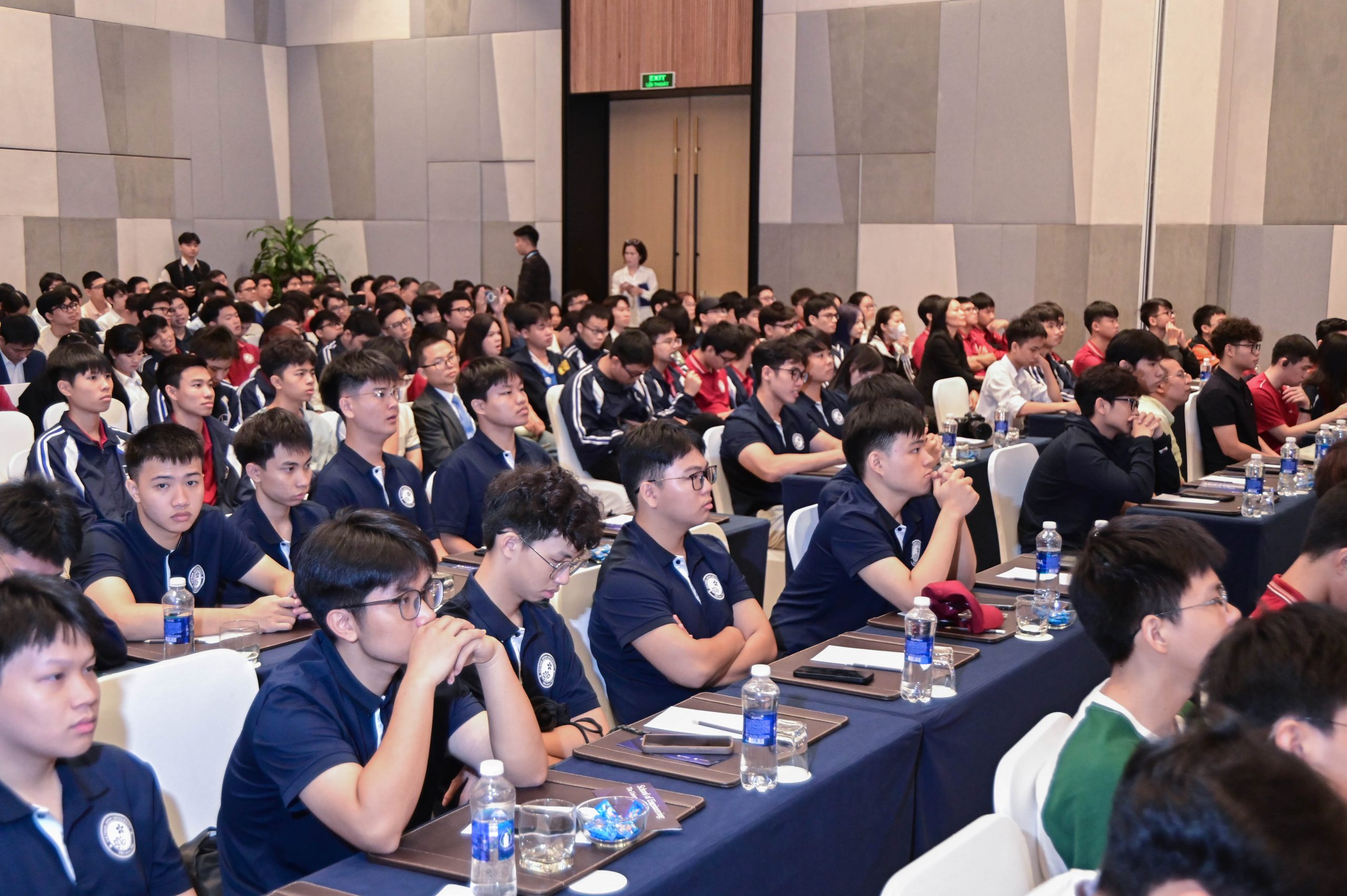
From an open lecture and a question addressed to a professor to conversations on the sidelines of the Symposium, students can begin to develop a clearer understanding of research, technology and the paths they may wish to pursue in the future. This is also how VJU is gradually building an educational environment where education, research and international collaboration are closely connected, creating more space for students to actively explore knowledge and broaden their opportunities for future development.