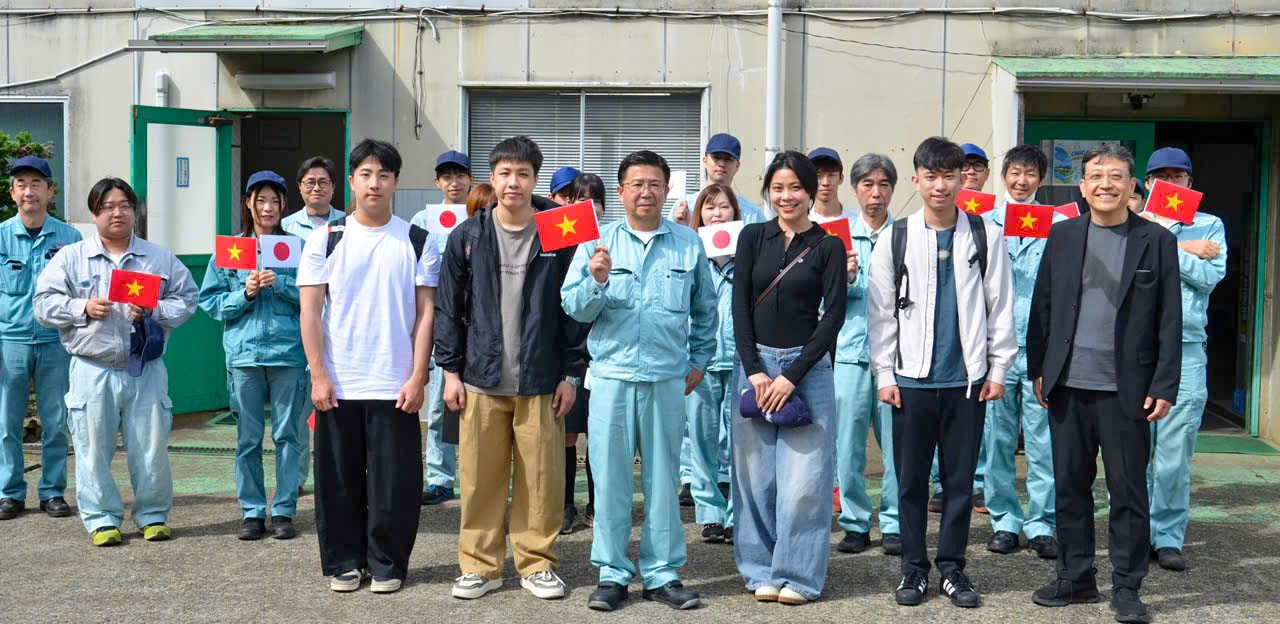
From October 5 to 11, 2026, students from VNU Vietnam Japan University (VJU) took part in an internship program at Itoki Corporation, a Japanese company specializing in workplace planning and design, as well as the manufacture and sale of office furniture and products for research, logistics, and public facilities.
For students in Civil Engineering (ECE) and Intelligent Mechatronics System And Japanese Manufacturing (EMJM), the internship offered an opportunity to connect classroom knowledge with real-world production processes while gaining insights into the Japanese working environment and corporate culture.
From technical drawings to finished products
For Nguyễn Kim Quý, a second-year Civil Engineering (ECE) student, the internship was an opportunity to explore how a product takes shape, from its initial design drawings to the finished item.
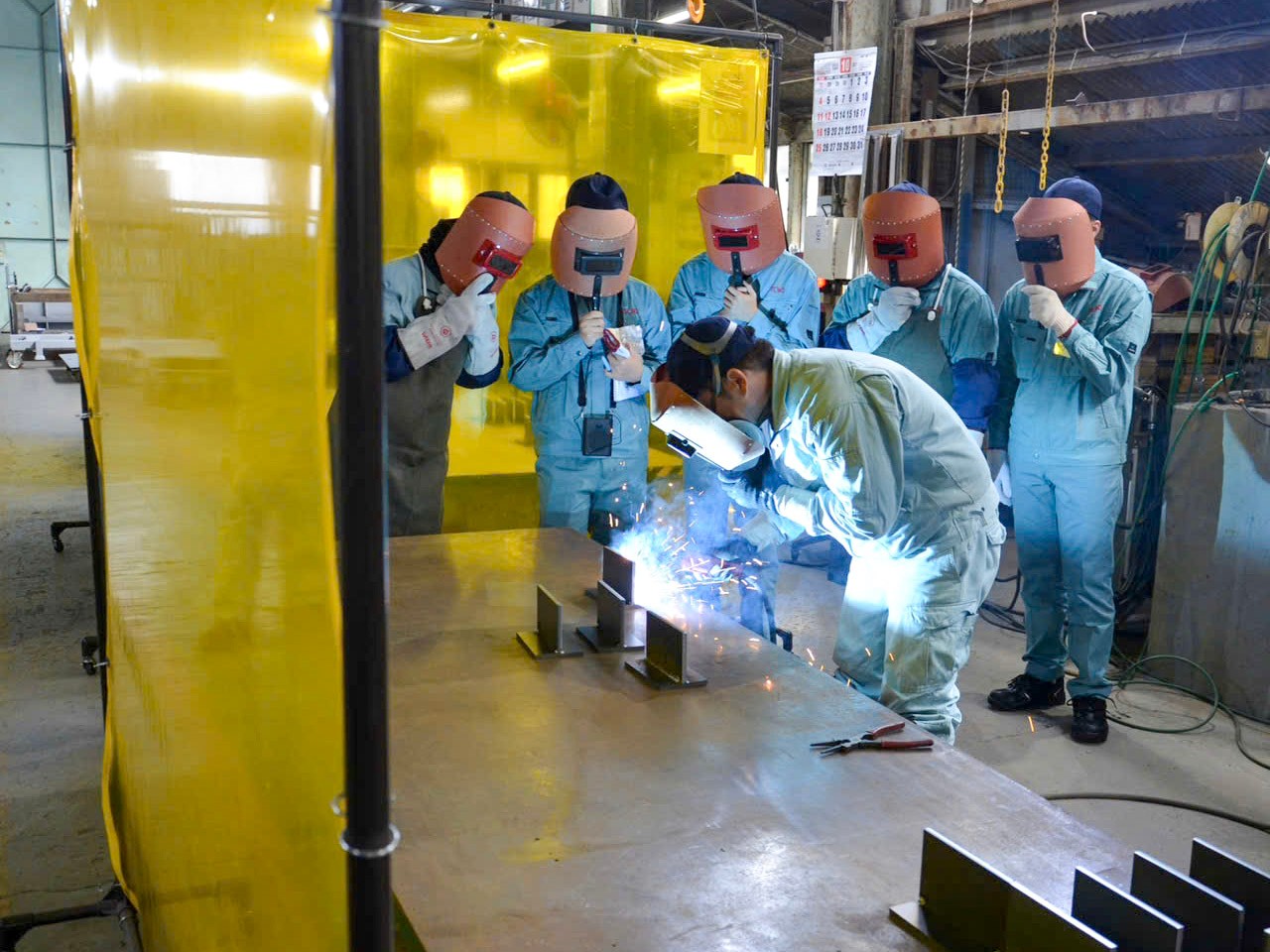
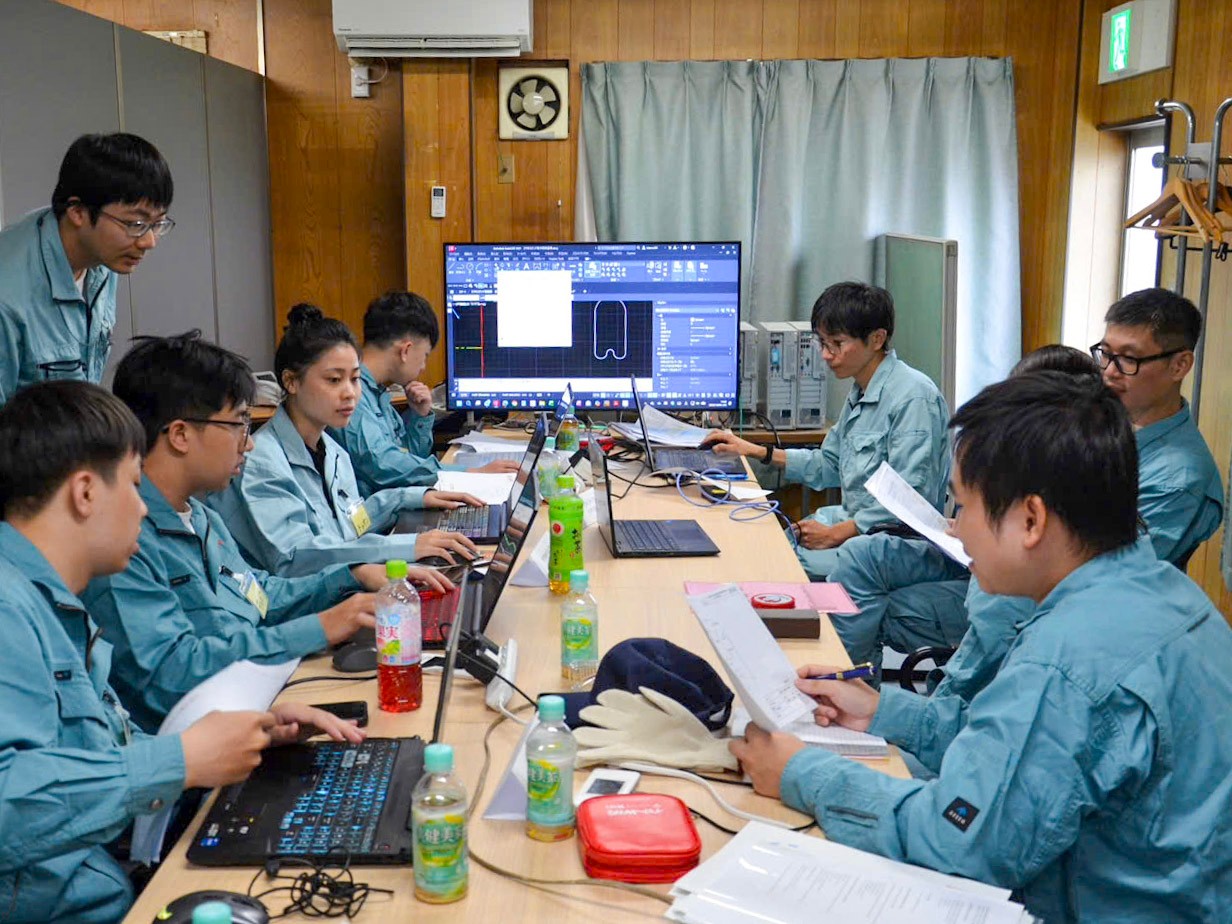
At Itoki, Quý had the chance to design components using CAD software, process sheet metal with laser-cutting machines, practice welding, and assemble parts of a movable partition. Through these activities, Quý came to understand how the accuracy of technical drawings directly affects the subsequent manufacturing and assembly processes.
The hands-on welding session left a particularly strong impression. What seemed like a simple task proved much more challenging when Quý tried it firsthand. Producing a quality weld requires precision, patience, and a steady hand. Quý also gained a better understanding of how weld quality directly affects a product’s durability, making careful workmanship and years of practice essential. “If I become an engineer in the future, I will have a better understanding when designing and communicating with the workers,” Quý shared.
Understanding the details behind product quality
Also taking part in the internship, Phạm Đức Tiến, a fourth-year student in the Intelligent Mechatronics System And Japanese Manufacturing (EMJM) program, was particularly interested in how a Japanese company organizes its production processes and maintains quality control. Rather than learning about machinery solely through textbooks and technical materials, Tiến had the opportunity to observe processing equipment firsthand, understand the functions of different machines, and explore the components that make up a finished product.
Through guidance from Itoki’s engineers, Tiến realized that product quality depends not only on technology or individual skills, but also on attention to detail, adherence to procedures, and a commitment to continuous improvement. Tiến also learned about workplace communication and coordination between departments, recognizing that an engineer’s capabilities extend beyond technical expertise to include listening, communicating ideas, and working effectively in a team.
With plans to pursue a career in engineering in Japan, Tiến viewed the internship as an opportunity to gain a deeper understanding of Japanese corporate culture and the expectations placed on engineers in a professional working environment.
A first experience that opens the way to future plans
For Nguyễn Văn Đạt, a fourth-year EMJM student, the trip was especially meaningful as it marked his first visit to Japan. Before departure, Đạt was excited to see advanced machinery in operation and discover how the day-to-day work of Japanese engineers compared with what he had learned in class.
At Itoki, Đạt learned about the operating principles of hydraulic presses and laser-cutting machines, took part in welding activities, and helped assemble components. He was impressed by the engineers’ dedicated guidance, as well as the disciplined working practices and the implementation of the 5S methodology throughout the factory. Despite housing large-scale machinery, the production area was consistently kept organized and clean, with a strong emphasis on safety.
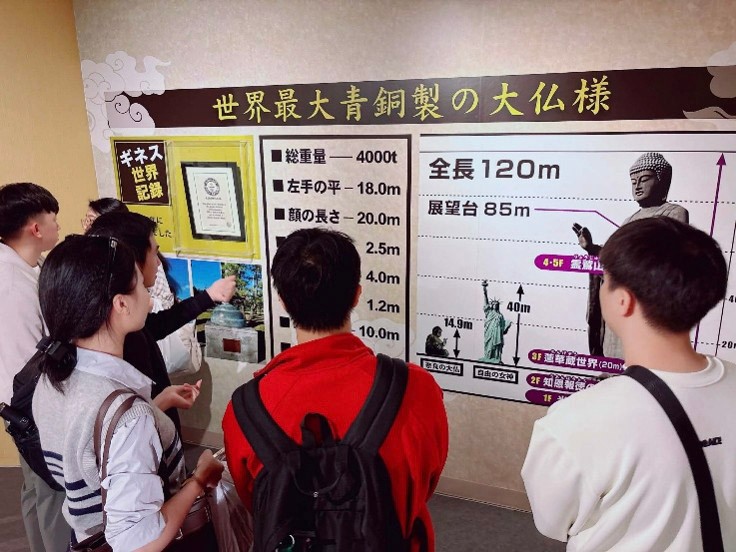
Beyond the time spent at the company, a visit to Ibaraki Prefecture also gave Đạt a chance to learn more about Japanese culture and everyday life. These experiences strengthened his ambition to continue studying and working in Japan, while giving him greater confidence in his career plans.
Although each student had different interests and learning goals, all three agreed that their experience at Itoki helped them better understand the connection between academic knowledge and professional practice. This is also the value of the industry connections VJU provides: giving students opportunities beyond the classroom to gain practical experience and develop a clearer picture of their future careers.
To make the most of similar opportunities, Quý, Tiến, and Đạt encourage fellow students to actively seek information, strengthen their technical knowledge and language skills, and, most importantly, be confident in applying when opportunities arise. Real-world experiences, even when things do not always go as planned, can help students better understand their abilities and career aspirations.
*Photos courtesy of Itoki Corporation and our students.